Thursday, December 19, 2024

Is Life in America Possible Without Corporations?

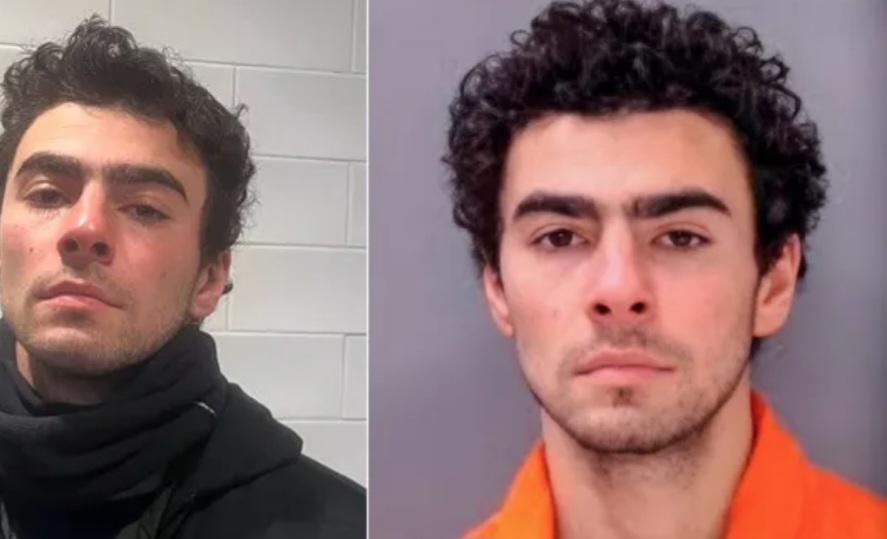
The recent scandal involving UnitedHealth care CEO Luigi Mangione, culminating in his arrest at a McDonald’s, has reignited discussions about the role and impact of corporations in American life. While criticism of corporate greed is nothing new, it raises an essential question: Can life in America truly function without corporations?  

Many of these entities, like UnitedHealth care and McDonald's, are publicly traded companies. Waging war against them is, in some ways, waging war against the nation itself. My phone service is provided by Verizon, a corporation, the car I drive is from a major corporation, the gasoline I fuel my car with comes from a major corporation, the two credit cards in my wallet are issued by American Express and Visa, both major corporations, and most of the food I eat is produced and sold by corporations. Even the Tylenol I bought at CVS is a product of a corporation. These are just a few examples of how deeply corporations impact our daily lives. Instead of constantly fighting them, perhaps we could focus on fostering dialogue with them. The unfortunate thing about these entities, however, is that the very means through which we could foster dialogue with these corporations are heavily influenced by these same corporations. Congress is the arm of government that could make change happen, but it's hard to see a congressman or woman who has not accepted donations from a corporate donor towards their campaign. Politics in America is expensive.  

Just think about it: millions of Americans have pensions and retirement funds tied to these corporations, meaning their financial futures are directly linked to corporate success. This interconnectedness makes the discussion about corporate accountability far more complex.  

One of the most shocking aspects of Mangione’s downfall is the allegations against him, including charges of terrorism—a severe accusation that underscores the growing public frustration with corporate excess. His fatal action against a corporate CEO has earned him a terrorist charge on top of everything. Can you see what I meant? It's almost impossible to distinguish these non-living entities from the U.S. government. It will be nearly impossible for him to fight these charges despite the public’s outcry and support. Luigi is not alone. But corporations over the years have made an example of people who thought they could cite with the little guy and win. These corporations have an unlimited amount of money to fight and buy their way to anything. Remember the case of Steven Donziger and Chevron Corporation in South America. Donziger, a brilliant Harvard-trained human rights lawyer, sued and won a case against Chevron, securing damages and a reward of over $9 billion. However, he ended up with a RICO charge in NYC putting him under house arrest for over three years, highlighting the immense power and influence these corporations wield. These kind of examples are endless. Steve Donziger by the way is in touch with the White House to hopeful get pardoned by President Biden before he leaves office next month. I hope he get pardoned. He did his time with corporate America's prison and even got disbarred from practicing law. What a shame?

One example to make things clearer is the fact that during COVID, the best way for the government to keep the economy in motion was through the stimulus check and paychecks protection program (PPP). This was what many called corporate welfare. One happened in 2008 after three bloody housing crises. I was in Ghana then, but the news of this melt down reverberated around the world. 

The government knew for a fact that in issuing those credits, people would go straight to corporate America and spend it. You might ask, how? You see, Amazon stock, which was trading at around $700 per share, went to over $1,500 overnight. While brick-and-mortar stores were closed, Amazon was open 24/7. The same is true for Costco, Walmart etc. Small businesses that weren't corporations and hence disappeared. A mom-and-pop store was not a corporation; hence, they couldn't survive either.  

As I reflect on this from a newly opened McDonald’s store in town today, I’m struck by the duality of corporations in everyday life. I didn’t come here to eat, as I rarely frequent McDonald’s due to concerns about the nutritional quality of its menu offerings. Instead, I came for something far more basic—a restroom. This reliance on corporate infrastructure, even for the most mundane necessities, highlights how deeply embedded corporations are in our lives.  

While corporations provide convenience and infrastructure, their profit-driven motives often come at a significant cost. United Healthcare, for instance, has been criticized for prioritizing profit over patient care. The denial or delay of insurance claims has led to countless tragedies, with families losing loved ones due to life-saving treatments being deemed too costly. This relentless pursuit of profit, while beneficial to shareholders, often leaves ordinary people to bear the consequences.  

Corporations in America hold immense power, rivaling that of individuals and even governments. They enjoy rights akin to personhood and wield influence that often shapes policy and public discourse. Their symbiotic relationship with the government is undeniable. Take, for example, the flock of CEOs visiting Donald Trump at his Mar-a-Lago estate before he assumed the presidency. These meetings underscore how deeply intertwined corporate interests and political leadership have become.  

The word “corporation” itself comes from the Latin word “corpus”, meaning “body.” It’s a reminder that a corporation is not a single entity but a collection of interests, stakeholders, and motives. This “body” sustains America’s economy; last year, the U.S. GDP exceeded $25 trillion, much of which can be attributed to corporate activity.  

As president-elect, Donald Trump exemplifies the corporate-political dynamic. A businessman first and a politician second, Trump has rarely, if ever, criticized corporate greed. His understanding of corporate America's role in driving the nation's economy is evident. Corporate America is not only the backbone of the economy but also the largest employer of the American workforce.  

Yet, the question remains: How can corporations balance profitability with social responsibility? Young people, in particular, are calling for change. They envision a world where corporations operate ethically, putting people before profit. However, achieving this balance requires systemic shifts in how corporations are regulated and how they view their role in society.  

The story of corporate America is far from over, and as a nation, we must navigate its complexities. While corporations are essential to the fabric of American life, their unchecked power and profit-driven motives demand scrutiny and reform.  

Yours in observation,

Ronnie


Luigi Mangione Extradited to New York to Face Manslaughter and Federal Terror Charges Part VIII

Today, December 19th, 2024 – Luigi Mangione, the man accused of gunning down UnitedHealthcare CEO Brian Thompson, was extradited to New York today after waiving extradition in Pennsylvania. Mangione, 26 years old, now faces a host of charges, including manslaughter, multiple counts of murder, and federal charges related to terrorism. All on top of what Pennsylvania has to charge him with. 

Mangione’s arrival in New York was met with a massive security detail rivaling that of a presidential convoy. Witnesses described the scene as overwhelming, with layers of law enforcement present to ensure his safe transfer. To say this is a high profile case is an understatement. For many, the sight of this highly intelligent young man shackled in a bright orange jumpsuit was a sobering reminder of a life now derailed by violence. This scene was hard to watch as my heart ached for him. What a tragedy?

Mangione, now viewed by some as a villain and by others as a hero, allegedly shot Thompson outside the Hilton Hotel in Midtown Manhattan on December 4th. Authorities believe the attack was premeditated and meticulously planned. Mangione is accused of waiting for Thompson for hours before shooting him in the back.  

After his arrest at a McDonald’s in Altoona, Pennsylvania, law enforcement discovered a 3D-printed firearm, a 9mm pistol equipped with a silencer, $8,000.00 in cash and another 2,000.00 in foreign currency and a fake government ID allegedly used to check into a New York hostel prior to the attack. The weapon according to police investigation matched the one used in Thompson's murder.  

Mangione now faces serious charges in both state and federal courts as well as Pennsylvania. In New York, he has been charged with 11 state offenses, including three counts of murder, with two linked to terrorism. The most severe charge, first-degree murder in furtherance of terrorism, carries a potential life sentence.  

Additionally, federal prosecutors unsealed a complaint today charging Mangione with four federal crimes:  

- Stalking 

- Travel and interstate commerce stalking 

- Murder through the use of a firearm

- Firearms offenses 

Mangione’s federal charges have been met with particular attention due to the allegations of terrorism. Prosecutors argue that the attack stemmed from deep resentment toward UnitedHealthcare and the broader health insurance industry.  

Public support for Mangione from a segment of the population critical of corporate America and the health insurance industry has created security concerns. According to CNN analyst John Miller, law enforcement is worried not about attacks on Mangione, but about attempts to free him from custody. This could explain the heavy nature of security presence before and during his transportation to New York. 

This sentiment was echoed by New York City Mayor Eric Adams, who personally escorted Mangione upon his arrival. In a statement, Adams condemned the violence, saying, "The act of terrorism and violence stemming from Mangione's case is something that will not be tolerated in this city. There are mechanisms in this country to address grievances, but violence is not one of them."  

Mangione's actions have sparked national debate. Some view him as a symbol of resistance against corporate greed or excesses, particularly in the healthcare industry. Others see him as a criminal who undermined the rule of law and needed to face the full weight of the law.

As Mangione awaits further hearings, his case raises larger questions about corporate accountability, public resentment, and the limits of protest in America.

As far as the younger generation in his age group are concerned, they want him freed and they believe from a poll recently that Mangione's actions were justified. It's too hard to find reconciliation to how murder is justified in this case. 

I promised I was going to keep you all updated. There you have it.

Stay tuned!

I remain your pal,

Ronnie 


The Trouble with Healthcare Expectations: A Clinical Perspective


A few weeks ago, I cared for a patient in his 80s who had been admitted to the hospital after a fall. Despite undergoing a series of tests, including imaging and lab work, the results showed no fractures or hematomas. However, he remained in significant pain, unable to lie flat, stand, or even get out of bed to use the bathroom. As a result, he frequently required assistance for basic needs, including standing moving his bowels.  

While making rounds, I walked into the patient’s room, and he greeted me with, “Perfect timing. I’ve been trying to get somebody’s attention but failed.” Before sharing his needs, he expressed his frustration. He explained that before choosing to come to the hospital, he had researched its ratings and reputation, finding it highly rated. Based on this, he had high expectations for his care. However, his experience thus far had fallen short of those expectations, leaving him disappointed.  

When I asked what I could do for him, he said he just needed his table moved closer—something so simple.  

This encounter highlights a significant issue in healthcare: managing expectations in an incredibly complex field. Hospitals, like any business entity, compete with one another and often overpromise in their advertising. This can lead to situations like my patient’s, where the reality of care doesn’t match the expectations set by flashy promotions. Healthcare, unlike a five-star resort, cannot be marketed in the same way. It involves challenges like unpleasant realities, uncertainty, and even death, which must be taken into account.  

Having had experience in other industries before entering healthcare, I can confidently say this field stands apart in terms of difficulty. This is not career bias but an acknowledgment of the multi-dimensional demands healthcare professionals face daily.  

Healthcare is uniquely complex because it operates at the intersection of physical, emotional, and psychological factors. Clinicians are not just treating illnesses—they are simultaneously managing the fears and uncertainties of patients and their families. This requires balancing medical knowledge, clinical assessments, and effective interventions while striving to deliver a positive patient experience. The sheer number of moving parts makes this an extraordinarily challenging task.  

One significant barrier to meeting patient expectations is staffing. If we had enough staff, it wouldn’t have taken so long for someone to enter the patient’s room and move his table. Unfortunately, the healthcare industry is notorious for burnout and high turnover rates. The demanding nature of clinical work leads many professionals to leave the field, while younger clinicians often do not stay long enough to establish roots. Hospitals are caught in a constant cycle of hiring and losing staff, which inevitably affects patient care.  

These challenges are well-documented and frequently discussed among clinicians at staff or even board meetings.  

Returning to my patient, I reassured him that we were committed to doing everything possible to improve his experience. After meeting his needs, he thanked me for taking the time to listen and for helping him feel valued. I, in turn, thanked him for trusting us with his care.  

Health is a universal experience, and the lack of it is often felt immediately. This is why I consider it a special calling to provide care with empathy, knowing that any patient could easily be a loved one or even myself.  

If you or a family member have ever had a hospital experience, I invite you to share your story in the comments section. Healthcare is a shared journey, and your insights could help shed more light on the challenges and triumphs within this essential field.  

Thank you for reading.  

Yours in care, 

Pal Ronnie


Wednesday, December 18, 2024

The Mystery of New Jersey’s Drones and My Patient’s Question Sparks a Deep Reflection

The skies over New Jersey have become the stage for an intriguing mystery. Reports of unidentified drones have sparked widespread curiosity, with many wondering what they are and why they’re there. 

Recently, while at work, I found myself discussing this very topic with one of my patients. She asked me what I thought about these drones, and though I didn’t have an answer, I felt honored that she valued my perspective on such a fascinating subject.  

The phenomenon has captured public attention, with numerous sightings reported in recent months. Witnesses describe these drones as unusually large, some even claim they are as big as cars. Others note their surprising loudness, a stark contrast to the small, quiet drones most of us are familiar with. The accounts are varied and inconsistent, adding to the mystery surrounding them.  

When my patient asked for my opinion, I told her that I believe the government likely knows what these drones are and their purpose in the skies. However, beyond that, I could only admit that they remain as mysterious to me as they are to her. Their existence and behavior seem to defy the common understanding of drone technology.  

I also pointed out a comment made by Donald Trump during a press conference, who, despite not yet being in office, exudes an aura of power and influence unmatched on the global stage. Time magazine has crown him the man of the year. Well, deserve, cant forget the major events this year. I digress, when he was asked about the mysterious drones causing public concern, Trump remarked that "our government knows exactly what those drones are, where they are from etc" he said it as if he was joking and even added that they are close to Bedminster, where he has a home and said he is not going there. His comment resonated with mine, aligning with my own thoughts, though I give his words greater weight. As a former president, Trump understands the full scope of U.S. governmental power and capabilities. His suggestion that the government is fully aware of these phenomena only reinforces the idea that such matters are tightly controlled and understood at the highest levels.  The question is what are we prepped for? We must pray.

Trump's influence extends far beyond policy or commentary these days. Consider the sheer number of CEOs, world leaders, and high-profile figures flocking to his Mar-a-Lago estate in Palm Beach. This is the embodiment of winning and fame, when individuals and entities, eager for his attention, vie for proximity to his power. That is what power is. It's a vivid illustration of why people are always willing to do anything to achieve influence and authority.  

Though it’s been barely two months since the elections, Trump’s political adversary, Kamala Harris, has almost faded from the national conversation. I often wonder what the narrative would have been had she won. What challenges or triumphs would she and the country be navigating now?  

In conversations with those still grappling with Harris’s loss, I have more than once pointed out an often-overlooked truth: many voters didn’t cast their ballots for Trump as much as they did against Harris. Her campaign lacked a strong foundation beyond gender equality and abortion rights, important issues, no doubt about it, but insufficient for an electorate grappling with economic instability. In times of financial uncertainty, people prioritize their immediate survival over broader social debates. 

As we approach January 21st, all eyes will be on Trump as he reclaims the presidency. His priorities must include addressing the drone issue, which has been causing widespread fear, and implementing strategies to stabilize the economy. Trump’s second term offers an opportunity to address the nation’s most pressing concerns and prove what Trump 2.0 can deliver for the United States.  

Like many others, I hope we eventually learn the truth about these aerial anomalies. Are they experimental technology, surveillance tools, or something else entirely? Until more information comes to light, these drones will continue to fuel speculation and intrigue among those who catch a glimpse of them soaring through the skies.

I remain your pal,

Ronnie

lawronald05@aol.com


Monday, December 16, 2024

The Luigi Mangione's Case Update Part VII

Hi Everyone in Ronnie’s World,

I hope you all had a wonderful weekend! Mine was great. I worked on Saturday and enjoyed a much-needed day off yesterday. I attended Mass at a new parish, St. Patrick’s, and absolutely loved it. The homily was on point! (Check out my post from yesterday for a reflection on that.)  

Today, I want to opine on “the Mangione” case—a story that seems to grow more complex and mysterious with each passing day. It’s fascinating how closely the public is following this, anticipating new developments and revelations. Like many of you, I’m still processing the shocking details that have emerged so far.  

The public support for Mangione has been extraordinary, to say the least. His Pennsylvania attorney, Thomas Dickey, reported that their office is inundated with calls from people eager to contribute to his defense fund. According to NewsNation, over $110,000.00 has been raised so far, despite platforms like GoFundMe reportedly shutting down efforts to support him.  That means his war chest could have been even bigger had there not been restrictions. Let that sink in.

Let’s take a moment to think about this. Mangione isn’t one of the working poor, struggling to make ends meet. He isn’t the kind of person you would typically expect the public to rally behind. Yet here we are. He killed a man, allegedly, in broad daylight, and the horrifying evidence is etched into the minds of billions across the world. And still, people are fighting for him, and funding his defense. How do we make sense of this? Why is this happening? I would love to hear your thoughts in the comments section.  

Mangione is set to be extradited to New York to face justice. Reports suggest he has been resisting extradition, but it’s only a matter of time. Once in New York, he will face charges of second-degree manslaughter, a decision that has raised eyebrows. Many are asking, “Why not first-degree manslaughter?” In New York, first-degree charges are typically reserved for cases involving law enforcement officers, judges, or similar circumstances.  

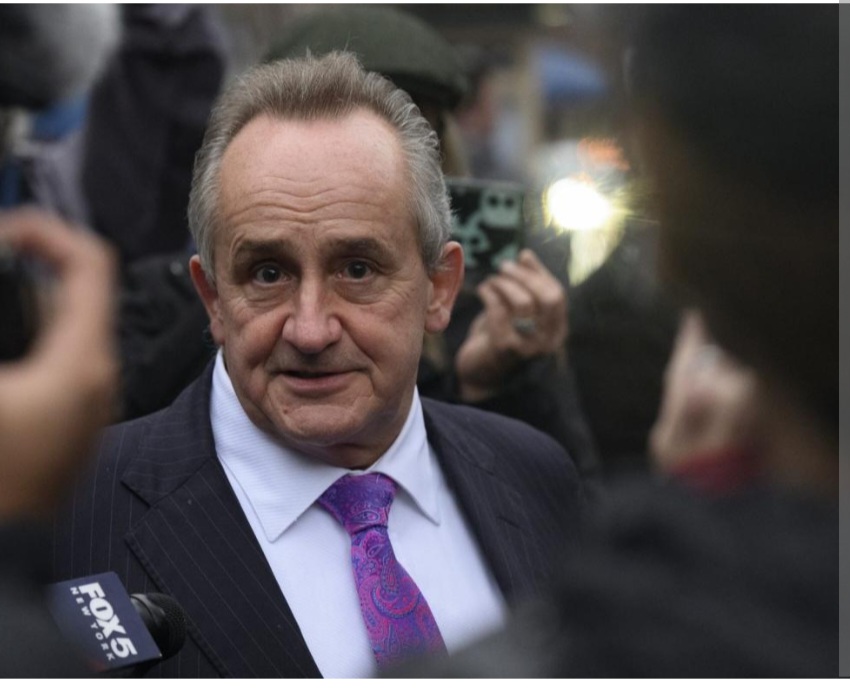
There’s also speculation in the liberal press that Mangione might plead insanity. But it's noteworthy that he has hired Karen Friedman Agnifilo, a high-profile New York attorney, to handle his case once he arrives in the Big Apple. This promises to be a legal battle worth following closely.  

Two weeks after the incident, I’m still struggling to make sense of it all. The evidence thus far, allegedly, the overwhelming support, the fundraising, and the broader narrative surrounding this case. What does it say about our society? About our values? Only time will tell.  


Please let us continue to pray for all the hurting parties involved.

And please stay tuned,  

Yours pal,  

Ronnie Law


Sunday, December 15, 2024

3rd Sunday of Advent Gaudete with Reflection

Today marked the 3rd Sunday of Advent, also known as “Gaudete Sunday”, meaning "rejoice" in Latin. The priest's vestments were rose-colored, symbolizing joy and a shift from the penitential tone of the season represented by purple. The rose color signifies the light breaking through the darkness of purple to rose, a reminder that the birth of Christ, the ultimate Light, is near. 


This Sunday was especially memorable for me as I attended Mass at St. Patrick’s Church in Bayshore, New York, a parish I had never been to before. The homily was deeply moving, and the first reading came from the Prophet Zephaniah:  

“Shout for joy, daughter Zion! Sing joyfully, Israel! Be glad and exult with all your heart, daughter Jerusalem!" (Zephaniah 3:14).  

The name Zephaniah means "God has hidden" in Hebrew, and the priest reminded us that what God has hidden among us is His very presence. This presence within us is the source of our hope and joy, especially during this season of Advent.  

The theme of this Sunday is joy (Gaudete), but how many of us truly experience joy during this time? Sadly, many descend into anxiety, depression, and stress, weighed down by worldly pressures. This happens because we often lose connection with what is hidden among us, God, who humbly came to us as an infant.  

For those of us who are aware of Christ's presence, it becomes our responsibility to share His joy with those suffering physically, emotionally, or spiritually. The Church calls us to perform works of mercy as a tangible expression of this joy to those around us:  

Corporal Works of Mercy  

- Feeding the hungry  

- Giving drink to the thirsty  

- Clothing the naked  

- Sheltering the homeless  

- Visiting the sick  

- Visiting the imprisoned  

- Burying the dead  

Spiritual Works of Mercy  

- Admonish the sinner

- Instruct the ignorant

- Counsel the doubtful

- Bear wrongs patiently

- Forgive offenses willingly

- Comfort the afflicted 

- Pray for the living and the dead

In today’s Gospel (Luke 3:10-18), people asked John the Baptist, “What should we do?” His response was to act justly and generously. Similarly, we can point others to the joy of the Advent season through small yet meaningful acts, like a warm smile to a stranger or a word of encouragement to someone in need.  

After Mass, I was walking to the car and met a wonderful woman named Rose (Like the Vestments the priest wore today). No coincidence. She is the same age as my aunt, so I will call her, auntie Rose Obiegbu, from Anambra State in Nigeria. What unfolded was nothing short of divine. We discovered that the priest who just said the mass, was from her hometown in Nigeria, and it was her first time at St. Patrick’s as well. She had recently relocated to Bayshore from the city and was looking for a home parish. We ended up sharing dinner across from the church, talking at length about Africa and our journeys. Life is truly amazing with God at the center. It was last Sunday around f this area and I'll miss it very much. But I was glad to have added today's experience to my overall time out on Long Island, New York. 

May the joy of this Advent season fill your heart and overflow to those around you.  

God bless you always.

I remain your friend,  

Ronnie


Saturday, December 14, 2024

My Reflection on Food: Healing Beyond the Bedside


This piece was conceived during my lunch break at work. I saw a colleague enjoying a chicken salad that looked both delicious and nourishing. Meanwhile, another colleague ordered from McDonald's, yes, that famous McDonald's. 

Reflecting on my experiences as a clinician over the past 10 years, I’m struck by the immense challenges that have shaped not only my career but also my worldview. The hospital floors I’ve walked are microcosms of larger societal issues: health inequities, the quiet epidemic of poor nutrition, and the limits of a healthcare system burdened by bureaucracy and burnout. Yet, as 2025 approaches, I hold on to hope, hope that change is possible, not just in how we care for patients but also in how we care for ourselves and one another. Can we have a dietary reset already?  

I’ve had shifts where I managed seven to ten patients, each with pressing needs and unique stories of pain. Some were drug-seekers battling relentless addictions. Others were elderly patients on the brink of hospice care. Many were burdened by chronic illnesses fueled by years of poor dietary choices and systemic neglect. I often wondered: What role does the food on their plates—or the lack thereof—play in the trajectory of their health?

The answer wasn’t far-fetched. I saw patients struggling with obesity, diabetes, and heart disease—a triad of conditions often linked to ultra-processed foods and sugary drinks. These products, stripped of their natural nutrients and loaded with preservatives, sugar, and salt, seemed like silent co-conspirators in their suffering. Some of these chemicals added in the foods make it impossible to lose weight when you want to and make you crave these foods when you don't want to eat them. 

The Trouble with Ultra-Processed Foods: The Hidden Enemy. It’s easy to blame poor health on personal failings, but the more I learned about ultra-processed foods, the clearer it became that the issue isn’t just individual, it’s systemic. Nationally, it’s a pandemic I observe firsthand every day. Ultra-processed products dominate American diets, accounting for over half of the average person’s daily calories. Juices, granola bars, and even plant-based meat replacements are marketed as “healthy,” but they’re designed for profit, not nourishment. Hello, Big Food—how are your profits?


Even in hospital break rooms, pastries, donuts, and other ultra-processed treats are staples, offered as gestures of goodwill. These foods are everywhere, making them hard to resist. Find someone who doesn’t eat pizza, donuts, or oatmeal cookies, you’d be hard-pressed, buddy.  

Studies show these foods disrupt our natural cycles, suppressing appetite-regulating hormones like GLP-1—the very hormone targeted by drugs like Ozempic. No wonder these medications are selling like hotcakes worldwide. Patients who unknowingly consume ultra-processed foods daily are far more likely to end up in my care, battling preventable conditions that could have been mitigated with better education and access to whole, nutrient-dense options.  

The healthcare system often feels reactive, focused on treating crises rather than preventing them. This assessment isn’t hyperbole; ask anyone in medicine, and they’ll confirm, provided they’re honest. Yet my work has taught me that small interventions can create ripple effects. I’ve started incorporating discussions about nutrition into patient care. For instance, when a patient asked why their blood sugar spiked after drinking “healthy” orange juice, I explained that it lacked the fiber found in whole fruits and was overloaded with sugar. Moments like these remind me that education is as crucial as any treatment.  

Still, many patients resist these conversations. Hearing the truth about diet often triggers guilt or defensiveness. Like most humans, we are resistant to change. One of the best decisions I ever made was to stop drinking sodas entirely about twelve years ago. I still have a long way to go with my diet, but I’m working on it. Paying attention to what we eat and staying active can make a big difference.  

I’m optimistic about the upcoming 2025 dietary guidelines, which promise a closer look at the chemicals in ultra-processed foods. If these guidelines lead to even small changes—like swapping one ultra-processed item for a healthier alternative per day, they could revolutionize public health. RFK Jr. has championed these issues for years, and as the incoming head of Health and Human Services under President-elect Trump, he might finally have the platform to effect change. Let’s hope Big Food and Big Pharma don’t derail his efforts.  

Personal Resolutions for 2025  

As I prepare to turn the calendar, I’m setting my own goals, both as a healthcare professional and as an individual. I’m committing to:  

First, advocating for Patients: Encouraging hospitals to provide better food options in cafeterias and for patient meals.  

Second, educating myself and others: Staying informed about nutrition research and sharing it with patients, colleagues, and the community at large.  

Third, focusing on prevention: Highlighting the connections between diet and health during patient interactions.  

Above all, I remain hopeful, hopeful that with new knowledge, we can address the root causes of many chronic illnesses; that Americans will demand more from food companies and policymakers; and that 2025 will be the year we finally take control of our health, not just in hospitals but in homes, schools, and communities.  

If the struggles of 2024 have taught me anything, it’s that healing doesn’t stop at the bedside. It extends to the choices we make at grocery stores, the policies we vote for, and the lives we touch along the way. Together, we can build a healthier future, one mindful meal, one informed choice, and one empowered patient at a time.  

Yours pal in dietary matters,  

Ronnie Law

PS

PS: In case you were wondering, I’m qualified to write about this subject because I actually completed an entire semester-long course in nutrition in college. This education deepened my understanding and passion for the subject, making it an issue close to my heart.

Stay tuned for more.


Pal Ronnie: lawronald05@aol.com 


Friday, December 13, 2024

Big Tech's Donations $1M a Piece to Trump’s Inauguration: A Critical Reflection

Today, I came across headlines at work about prominent tech leaders and companies donating significant sums to President-elect Donald Trump’s inauguration fund. I couldn't wait to look more into it when I got home. 
To me, this looks a whole lot like pandering for influence, a strategic move to stay on the president’s good side over the next four years. I must give it to them. What a clever move that is? Forget all the MAGA supporters. They come in after the big win is secured with their big dollars and buy influence. That is the power of money. 

Take Amazon, for instance. Reports indicate that Jeff Bezos’s company plans to contribute $1 million in cash to the inaugural fund and another $1 million in-kind through streaming the ceremony on Prime. It’s clear that these companies understand the stakes, that Trump could use his power of the presidency to scrutinize their actions, particularly given his grievances about their treatment of him during his last term. He might be accused of being petty, but he probably should. 

Let’s not forget how platforms like Meta and Twitter (now X) limited Trump’s voice toward the end of his presidency. While some may argue they acted responsibly, others see these actions as politically motivated. Trump himself likely viewed this as evidence of bias, particularly in the wake of COVID-19 and the contentious 2020 election. The widespread "Anything but Trump" sentiment during that period certainly didn’t help. These mega platforms helped fuel that against him.

Big Tech knows the power the president wields and, by extension, the risk of being targeted for investigations. Their donations seem like a calculated effort to avoid future scrutiny. But here’s where I stand: I hope they “do” get investigated. The American people deserve to know the truth about how these corporations might have influenced political processes.  

That said, the ordinary person is left out of this power play. How many of us can afford to donate millions to an inauguration fund or have the ear of those in power? This is how the politics of influence works in America. Those with deep pockets get the attention, while the rest of us are left wondering about fairness. It could just be that they are being generous toward a fellow billionaire who will be leading the most powerful country on earth. 

It's fair to note that writing about these things isn't anti-capitalist or anti-billionaire or against the elites. Some of these corporations have created thousands of jobs and have made millions of people rich, especially Amazon. That is why we raise these concerns to help elevate morals in our world. 

Nothing in life is truly fair, but it’s worth reflecting on the systems that perpetuate these imbalances. As for me, I rest my case.  

I remain your observing pal, 

Ronnie  


Thursday, December 12, 2024

A Joyful Feast About Our Lady of Guadalupe and the Gospel of Life

Today’s Mass at St. Joseph the Worker was truly uplifting, as we celebrated the Feast of Our Lady of Guadalupe. This feast commemorates the miraculous apparition of the Blessed Virgin Mary to St. Juan Diego in Mexico in 1531, an event that led to the mass conversion of the Mexican people to Catholicism and Christianity. Before this divine intervention, the region was marked by practices such as human sacrifice. The appearance of Our Lady of Guadalupe transformed not only hearts but the culture, ushering in a profound reverence for life.  

Fittingly, Our Lady of Guadalupe is now the patroness of the unborn. Her image, miraculously imprinted on Juan Diego’s tilma, serves as a timeless reminder of the sanctity of life and God’s call to cherish and protect it at all stages. There were magnificent decorations in the church but I didn't have my phone on me so I couldn't take pictures to share in this piece. But I hope you get the picture in your mind alright and I found something online as you can see above. 

Today’s Gospel reading also reinforced this message beautifully. We heard the story of the unborn John the Baptist leaping for joy in Elizabeth’s womb at the sound of Mary’s greeting (Luke 1:41). This profound moment underscores the sacredness of life, even in the womb, and the divine connection between Mary, carrying our Lord, and Elizabeth, carrying the forerunner to Christ, John.  

Can you see the connections? The celebration of Our Lady of Guadalupe and the Gospel’s emphasis on life resonate deeply, reminding us of God’s boundless love and the dignity of every human being. Joy was the theme throughout. 

May we carry this message in our hearts, championing life, faith and joy wherever we go.  

Our Lady of Guadalupe, pray for us. 

God bless you, and

I remain your pal,  

Ronnie Law  


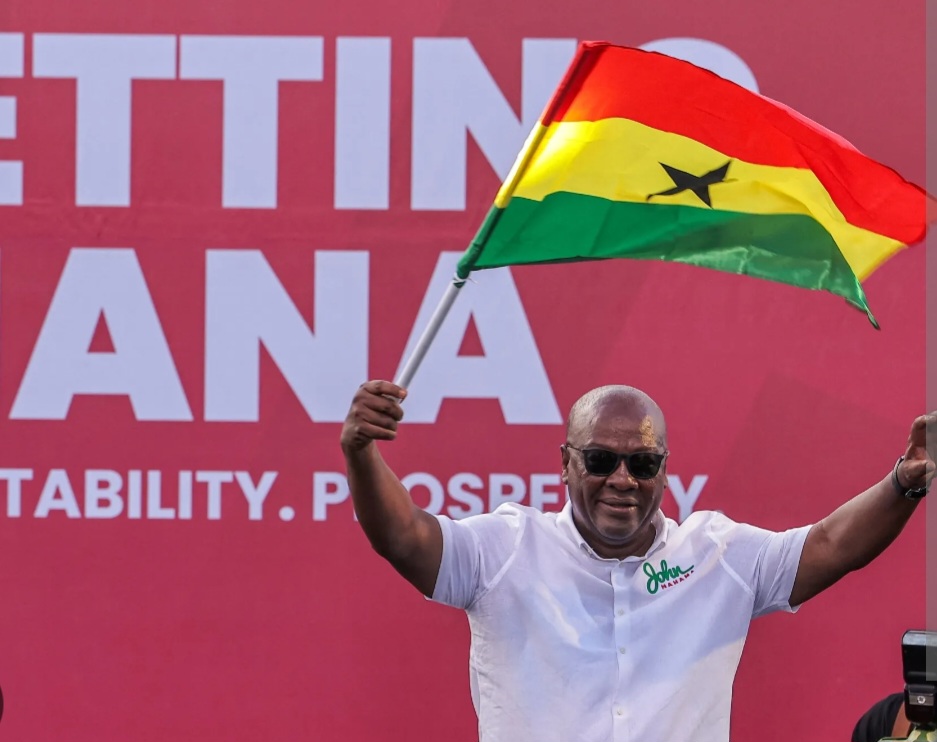
Mr. John Dramani Mahama Returns as President-elect of Ghana


Ghana just elected a new president!, not exactly new. On Saturday, December 7th, Ghanaians headed to the polls and elected John Dramani Mahama, a familiar face in the country’s political landscape. Mahama, who served as president eight years ago, has made a historic comeback, securing a second term after initially losing re-election to the incumbent president following his first term.  


This political trajectory is reminiscent of Donald Trump’s single term in the U.S (2016-2020)., but with a interesting distinction—unlike Trump, Mahama graciously conceded defeat after his first loss, retreated from the public stage, and patiently rebuilt his campaign to earn a second chance at leadership of the motherland.  


Ghana, as a republic since 1960 is known for its peaceful elections, once again demonstrated its commitment to democratic values. Despite speculations of potential unrest, the process was orderly and tension-free, contrary to the predictions of some alarmists. 


As a proud Ghanaian by birth and an observer of Ghana's democratic process, I hold high hopes for this new government. I also wrote about Trump's 2.0 and his return to the White House and could easily echo the same sentiments about Mahama. However, I have not been engrained in the Ghanaian politics for years now. So I acknowledge the gaps and could easily fill that in as time goes on.


It is my hopes indeed that this new and upcoming government will prioritize the nation’s well-being and work tirelessly for the progress of all Ghanaians.  This piece was just a quick follow up and update of last weekend's piece.


I remain your optimist pal for Ghana,  

Ronnie Law